Fastpacking: The Big 4 and the Top 4
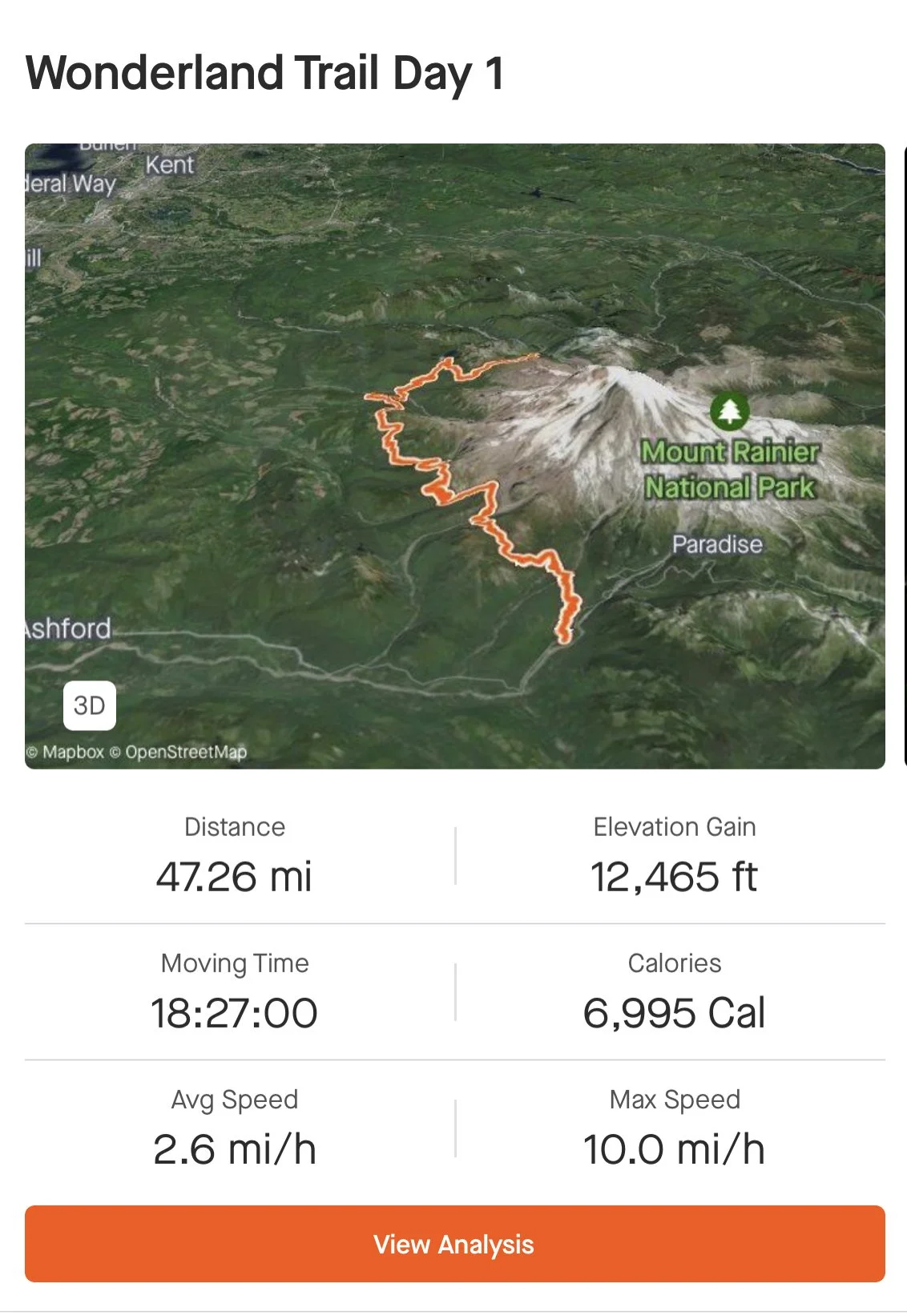
Doable, but usually 30-35 miles per day
4 pounds. That’s the goal; pack/pad/bag/shelter, a pound a pop. If I can keep the Big 4 under 4 lbs, then it leaves me about 10 pounds for all the rest. For years I’ve been toting about a 15 pound pack for summer season fastpacking, give or take a pound. A 15 pound pack is unnoticeable on my back, which is my ultimate test; to go all day and never NEED to remove my pack due to discomfort. A 15 pound pack weight is one of the most critical components of a septuargenarian trying to cover 30 to 40 miles and climb/descend 9-12 thousand feet per day. Clothing is another critical component of light weight. What combination of clothing will pack small and weigh less yet be comfortable for typical summer season weather AND be safe for unexpected harshness? Maybe consider this the Top 4: next to skin layer, windshirt, insulating piece and rain protection. I won’t get into footwear and bottom pieces, the individual will have to wear what works for them and is comfortable. Personally, I use hiking pants (never wear shorts) and trail runners for all conditions.
Let’s look at the Big 3. In the photo below I’ve included both a fair weather kit, which involves a light weight Borah Bivy at 4.5 ozs, or a “just in case” kit where I’m packing the more substantial Helium bivy. Even the fairweather kit also includes a 3 ounce full coverage tarp, as the Borah bivy is not waterproof, and there’s nothing more miserable than a bivy in the rain. The Helium has a full cover and clamshell entrance, but I’ve used it in foul weather and condensation is a problem if it’s closed most of the way. It’s a lot of protection though with sideways driving rain and is more comfortable in foul weather than a bivy/tarp combo.
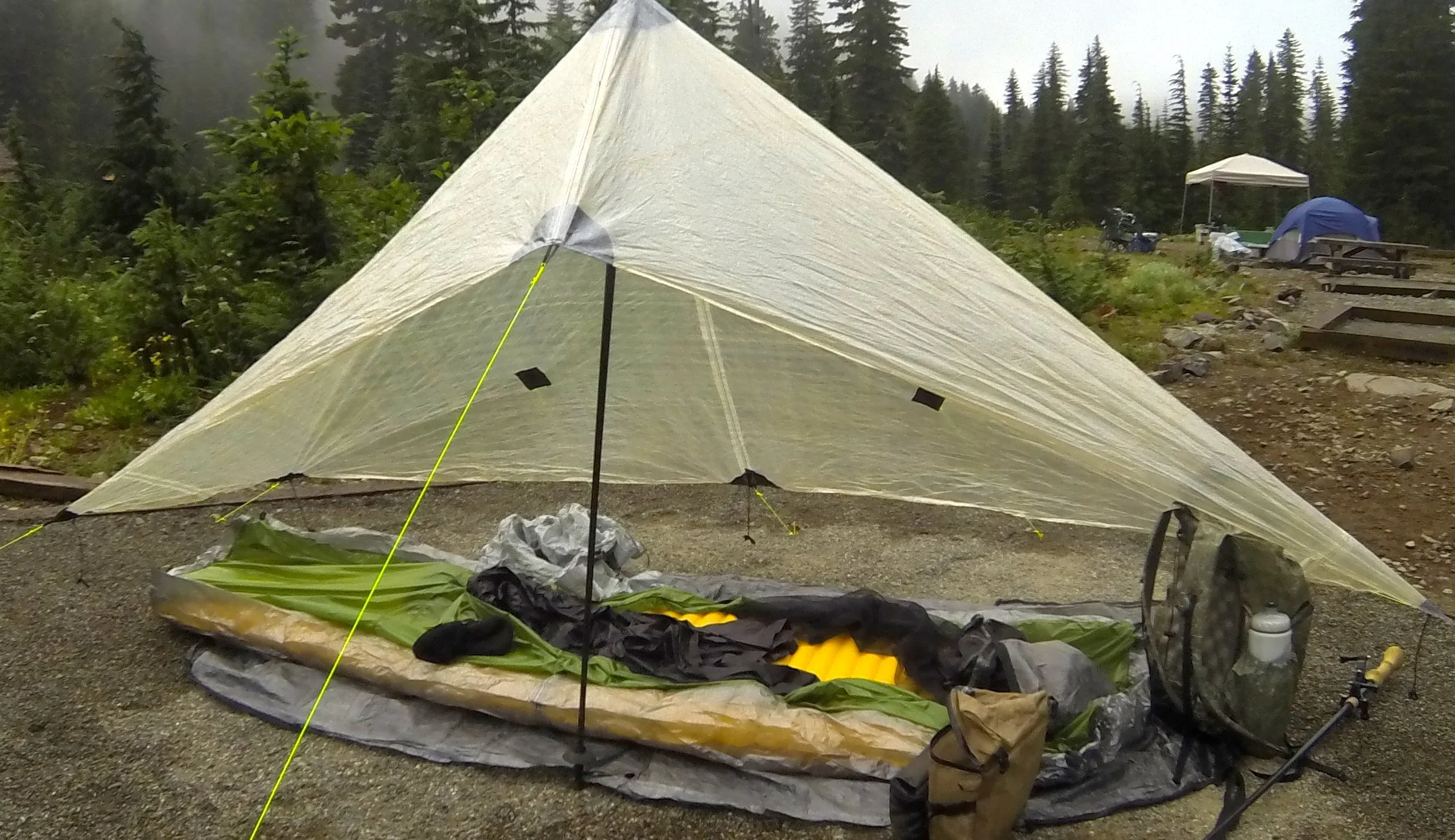
If using a non WPB bivy, I pack the original Zpacks Pocket Tarp at 3 ozs (Mowich Lake, 2013)
I actually have a tent that weighs less than the Helium bivy, at just under 15 ozs, so a more traditional set up with tent, pad, and bag is still less than 4 pounds. I would only move to a warmer bag in a shoulder season when temps may dip closer to freezing during the night.
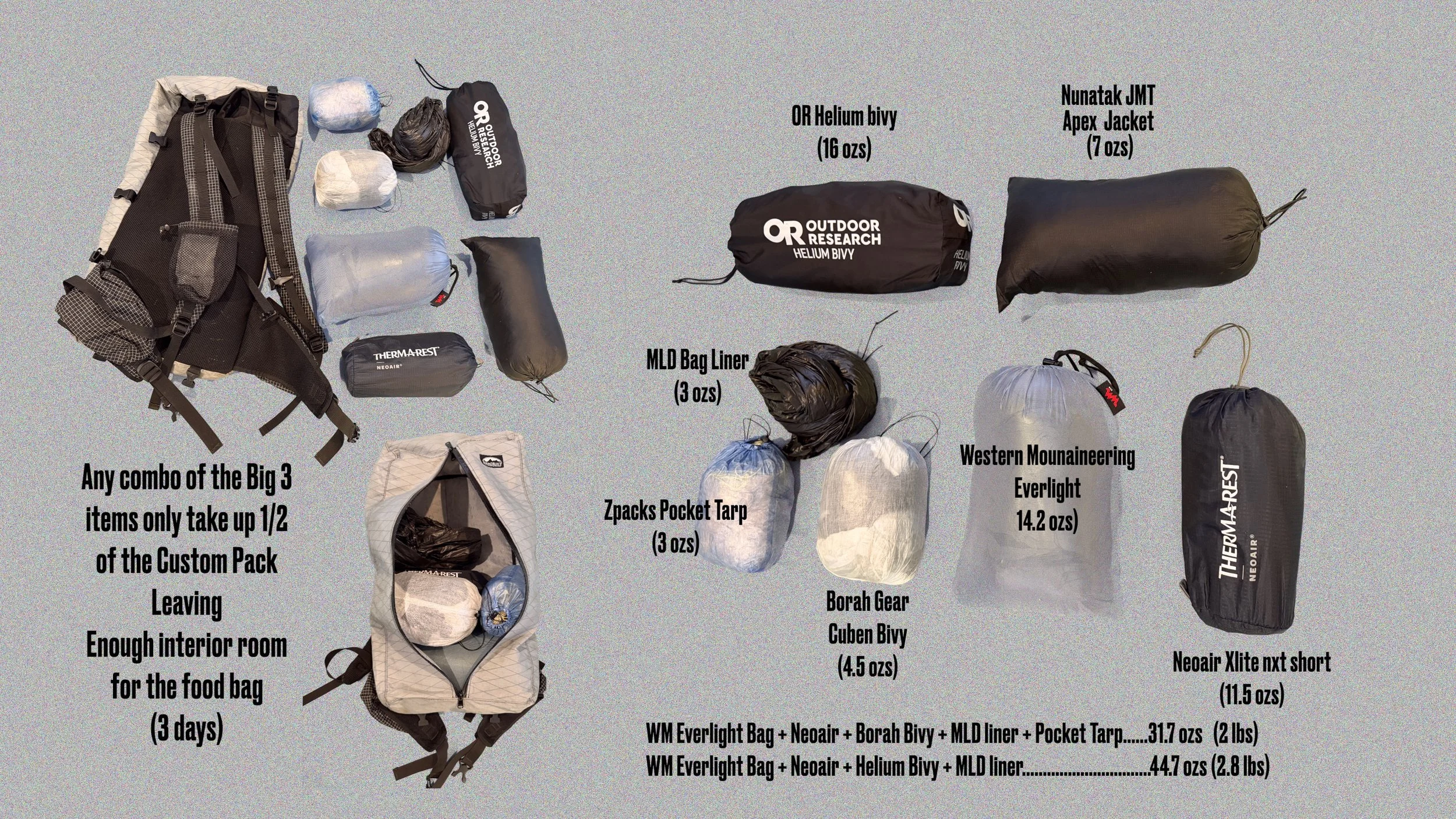
Big 3 (pad, bag, shelter) leave plenty of room in my custom Zimmerbuilt backpack
In sum, with my pack(s) usually weighing in around 1 pound, my Big 4 (Pack/Tent/Pad/Bag) will always be less than 5 pounds in the shoulder seasons and usually less than 4 pounds for a typical fastpack during the summer. Consideration: this blog is about fastpacking, not traditional backpacking where the user is spending a substantial amount of time in a camp site. When I’m covering 30-40 miles per day I’m usually ambulating 15-17 hours of that 24 hour period. This leaves just enough time to get set up for the evening anticipating an early getup, usually from 4-5:30 AM. Most times I end the day in the dark, and start the day in the dark. A good night is 7 hours of sleep. Fastpacking is a whole different animal from backpacking, but that doesn’t mean that one shouldn’t pay attention to their base weights. I did a few backpacks last year, and the only difference was I brought a tent and packed a warmer bag.
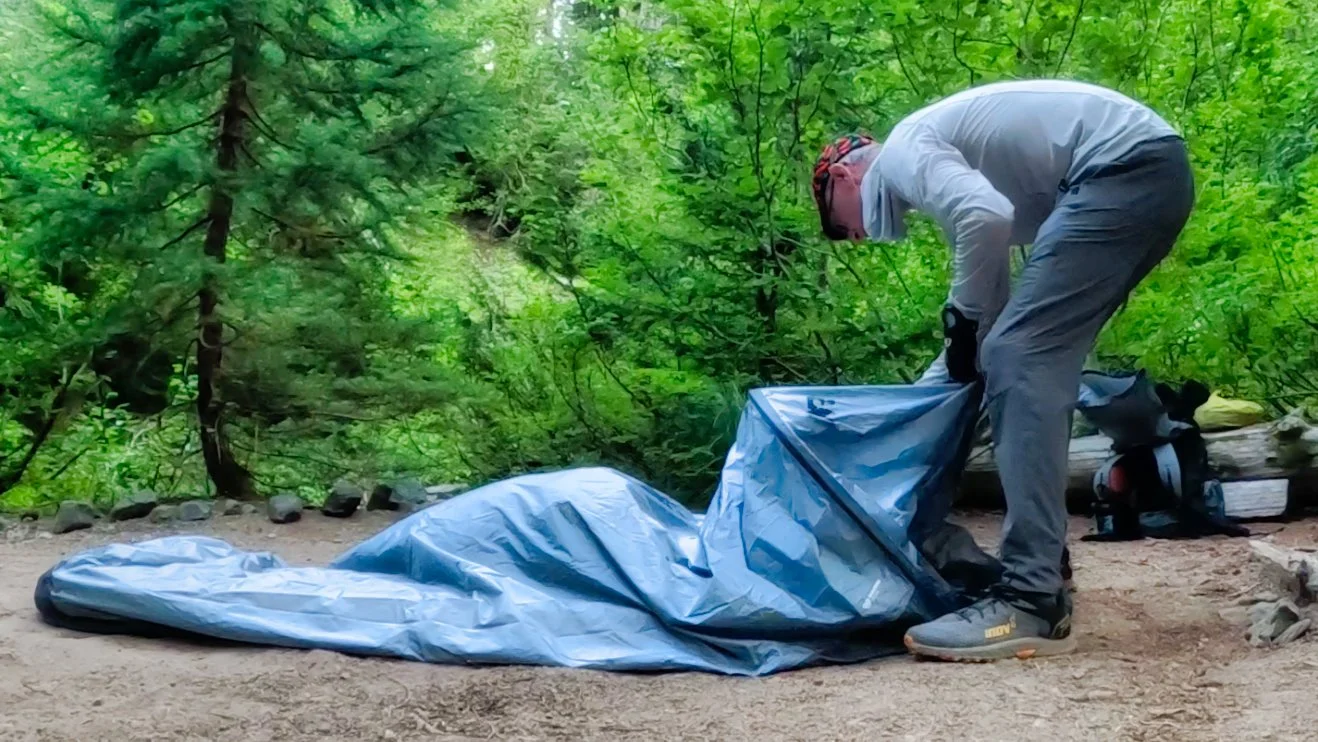
Setting up the OR Helium bivy for an overnight
TOP 3: What is it? Well, aside from one’s next to skin layer, it’s clothing that is worn on top. Yes, I know some people have shorts, gaiters, merino leggings, sleep clothes and pants, etc, but for my purposes I only wear pants (which I wear to bed) and trail runners. The real secret sauce is how do you layer for anticipated conditions and unanticipated conditions? For instance, I never go on a jaunt without a proper rain jacket. In my case I pack a Timmermade Silpoly Megazip pullover. Despite all the wonder jackets out there that cost upwards of 1000 bucks, it has been proven that when one is expending energy, be it just walking or laboring uphill, eventually the jacket will wet out when it is no longer able to move the body’s moisture through the membrane and outer layer, especially in high humidity. Silpoly is a non permeable fabric, 100 percent waterproof. The key to it, and any other top piece, is ventilation. I’ve spent entire days in rain with a DCF poncho, but my core was dry because of the venting options on it. The Megazip lives up to its name in that there is a zipper on each side running from wrist to hips, along with a quarter zip in the front. Now I usually plan my short 3 day trips over good weather, but in 2024 I was trying to pull off a YoYo and the weather was just not cooperating. That Megazip was on and off constantly, especially in heavy mist where it’s not technically raining but everything is wet. It functioned well as long as I kept on top of the venting. This, of course, is also valid for a wonder jacket if it has good side and front zips, but the Megazip is a mere 5 ozs, packs very small, has a roomy fit (most pullovers are wider than zip jackets) and long to cover my hips.
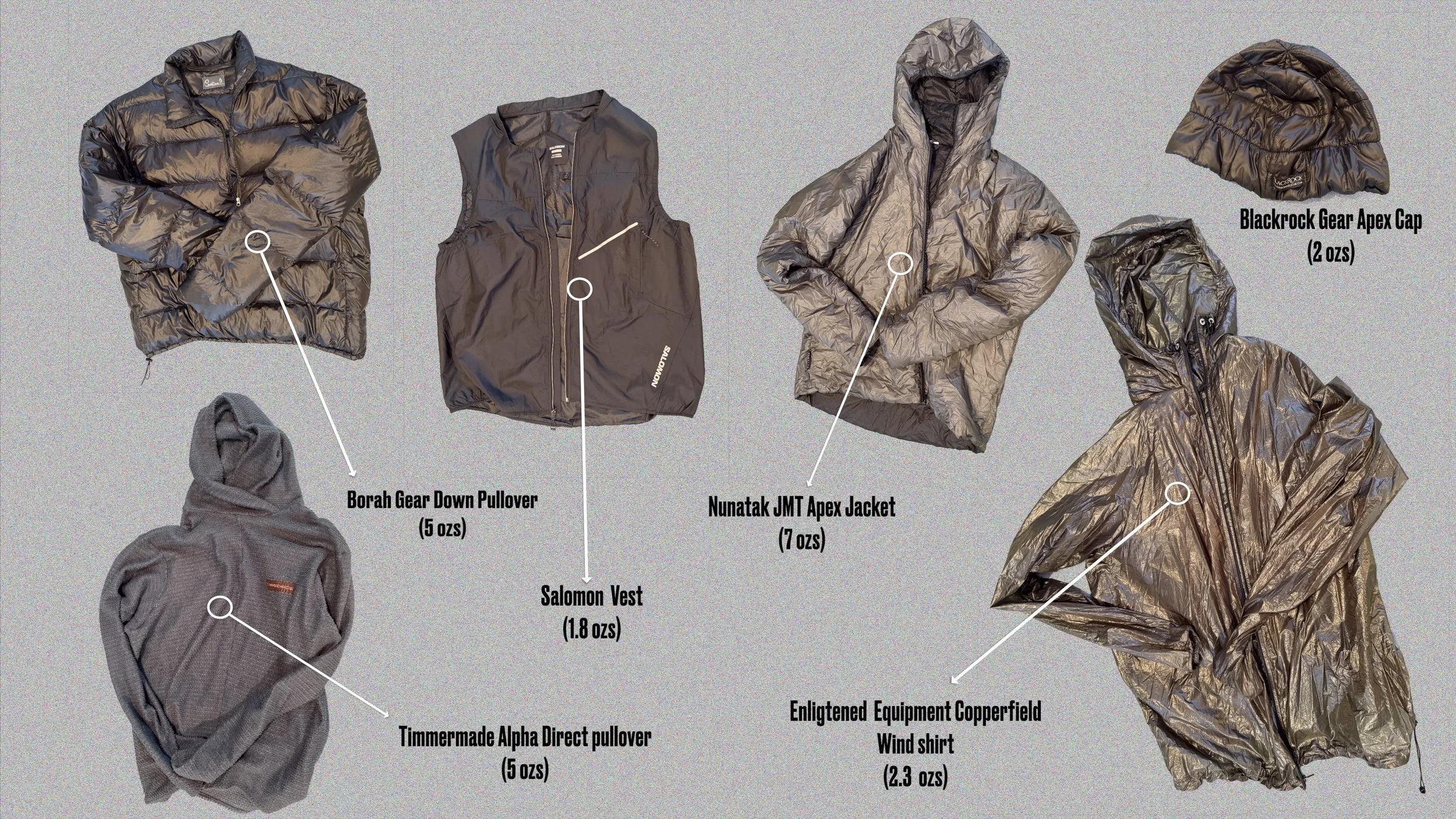
14 ozs for upper outerwear: Alpha Direct pullover, vest, EE windshirt and Timmermade Megazip Silpoly rain jacket (not shown)
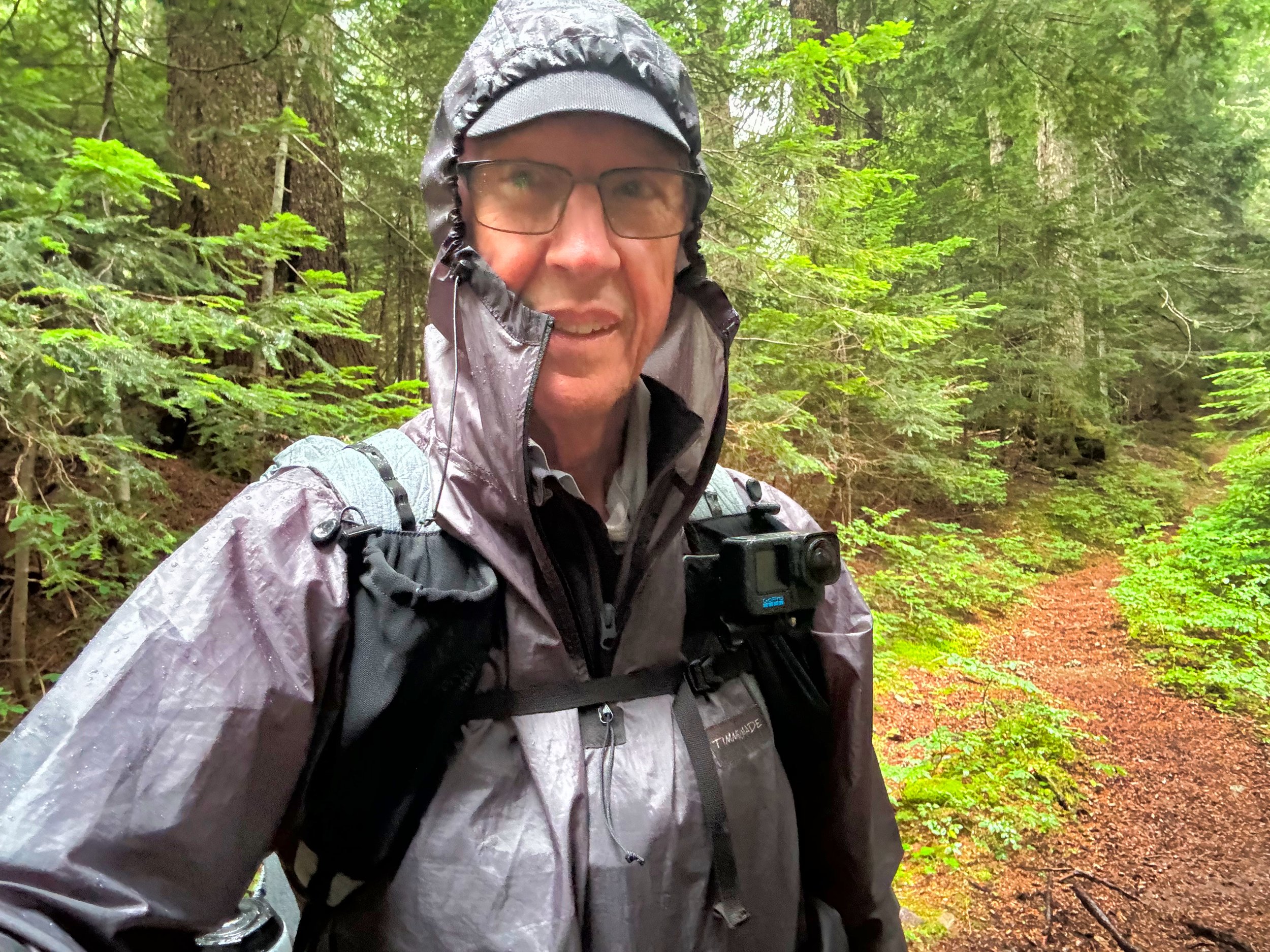
Timmermade Megazip Silpoly Rain Pullover
The Megazip is the outermost layer of my Top 3, but what’s in between is very important. I start with a long sleeve hoodie (for sun protection) which is always on. If there’s a bite in the air I add the vest (2 ozs) to trap heat next to my core. If it’s a bit chilly I’ll add the Enlightened Equipment Copperfield wind shirt (2 ozs). If it’s downright cold, out comes the Timmermade Alpha Direct pullover at 5 ozs. Alpha Direct is an incredibly versatile textile, extremely breathable because of the open weave (making it an active piece vice down) but also extremely warm for its weight if covered by a windshirt or rain jacket. The versatility of Alpha Direct makes its way into my pack because it can serve as an active piece (I use the 2 oz vest to protect the shoulders of this delicate weave from pack strap wear) or as a static piece like a down jacket. That Borah Gear down pullover is also 5 ozs but I would never wear it while moving, the down would soon wet out. You’ll also see in the diagrams a Nunatak Apex JMT jacket. Apex is also a synthetic material and can be worn while active, slightly heavier at 7 ozs. In the past I’ve almost exclusively used this jacket as a static “around camp” type piece; it maintains warmth when wet but the outer shell is also highly water resistant. It, however, is not as practical as the Alpha Direct combos. I’m listing these two insulators here as an example of what’s available, but also I can make my own choices last minute before I step on the trail. The down pullover makes an excellent pillow when stuffed in a “pillow” stuff sack. Bottom Line, I can weather the changing weather, so to speak. For mere ounces, combinations of these pieces will take me through heat to near freezing temps in blowing wind.
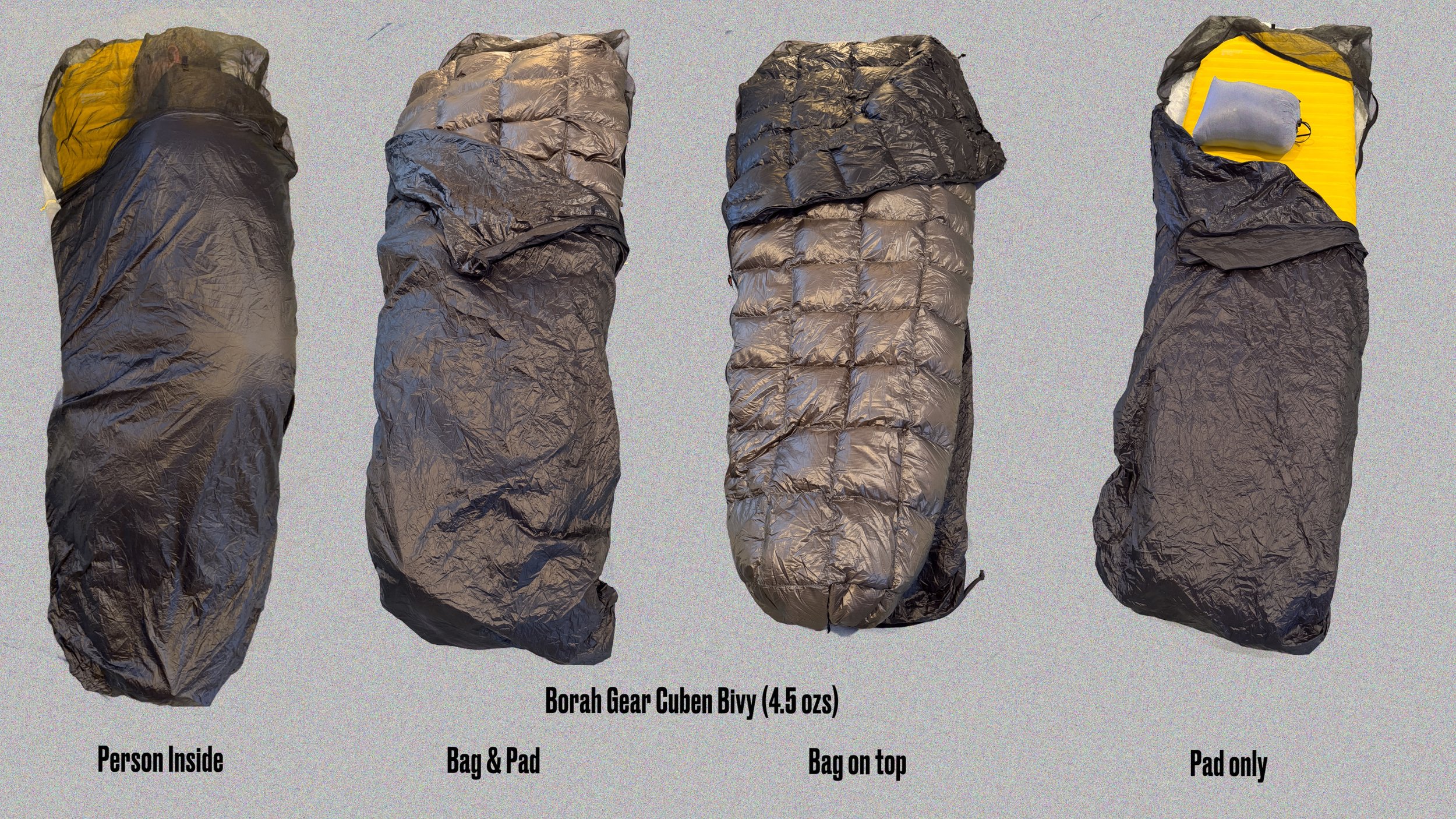
The Borah Gear Cuben Bivy (4.5 ozs) accommodates my Neoair Xlite NXT pad and Western Mountaineering Everlight bag
This coming ‘26 season I’m planning on using my custom made Zimmerbuilt pack for my anticipated fastpack of the Wonderland. It is a no-bounce pack with a center zip for access, purposefully built to lay against my back; most of my food along with any needed xtra water, plus my kit noted above and a small clothes bag will occupy this space. The detachable front bag (blue) will hold assundries I want ready access to during the day, along with that day’s food. The pack has two hip belt pockets. The detachable bag will also be used as a hang bag for the bear pole.
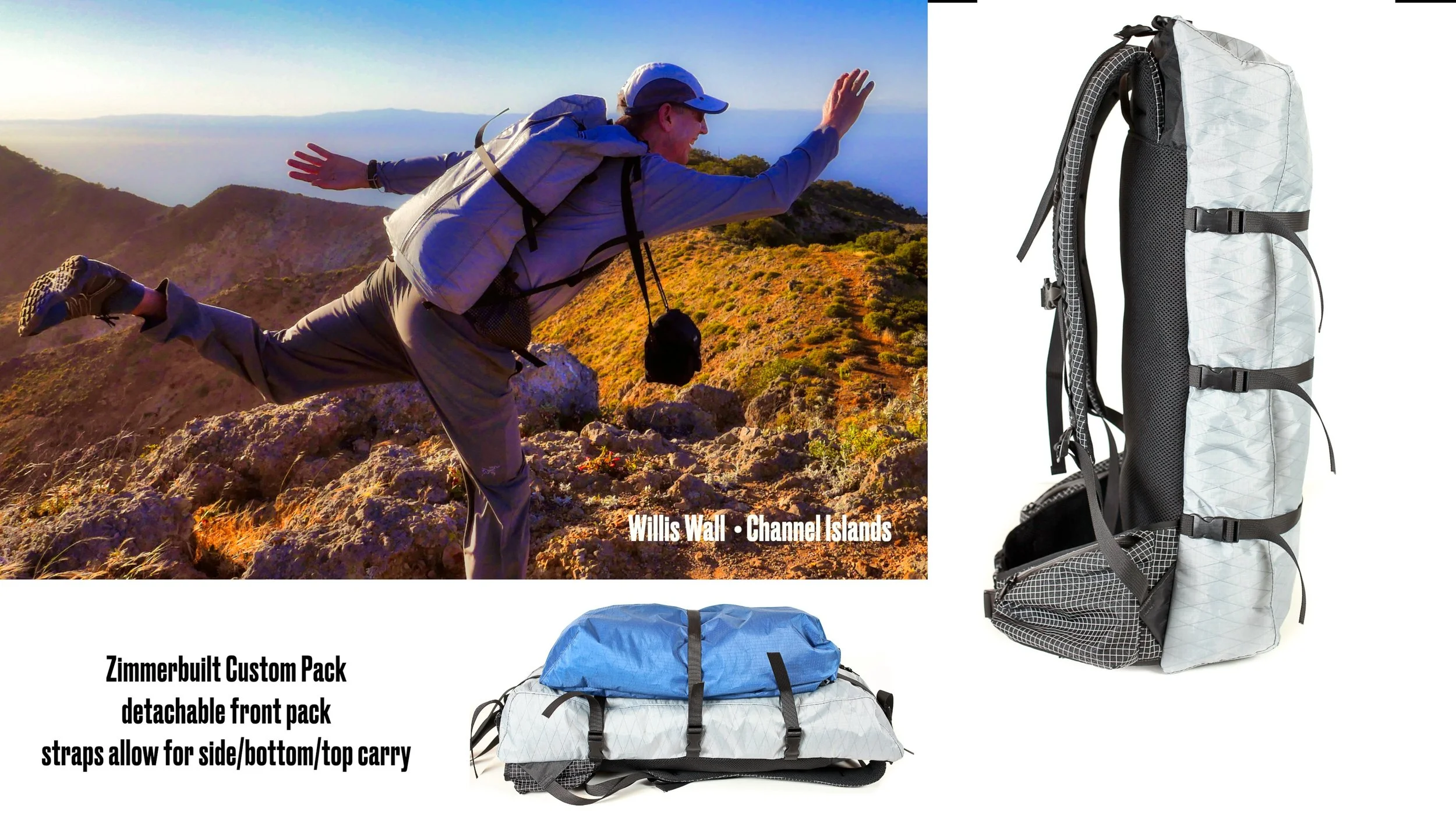
My Zimmerbuilt custom “Ultimate” pack system for fastpacking
With my Big 4 coming in under 4 pounds and my clothing kit at 14 ozs plus gloves, hat and extra socks, I’m looking at 5 pounds for the major items in the pack. That leaves me 10 pounds for those other items like sunscreen, glasses, foot kit, GoPro camera, InReach, phone, water tabs, 3 oz pillow etc, plus food and 1 liter of water. If my legs cooperate and the weather is fine, I may be able to get my total pack weight down to 12 or 13 pounds at the start of the trip. Every pound absent from my pack is energy returned for climbing and descending. This year, maybe even some running. 48 hours? One can reach.
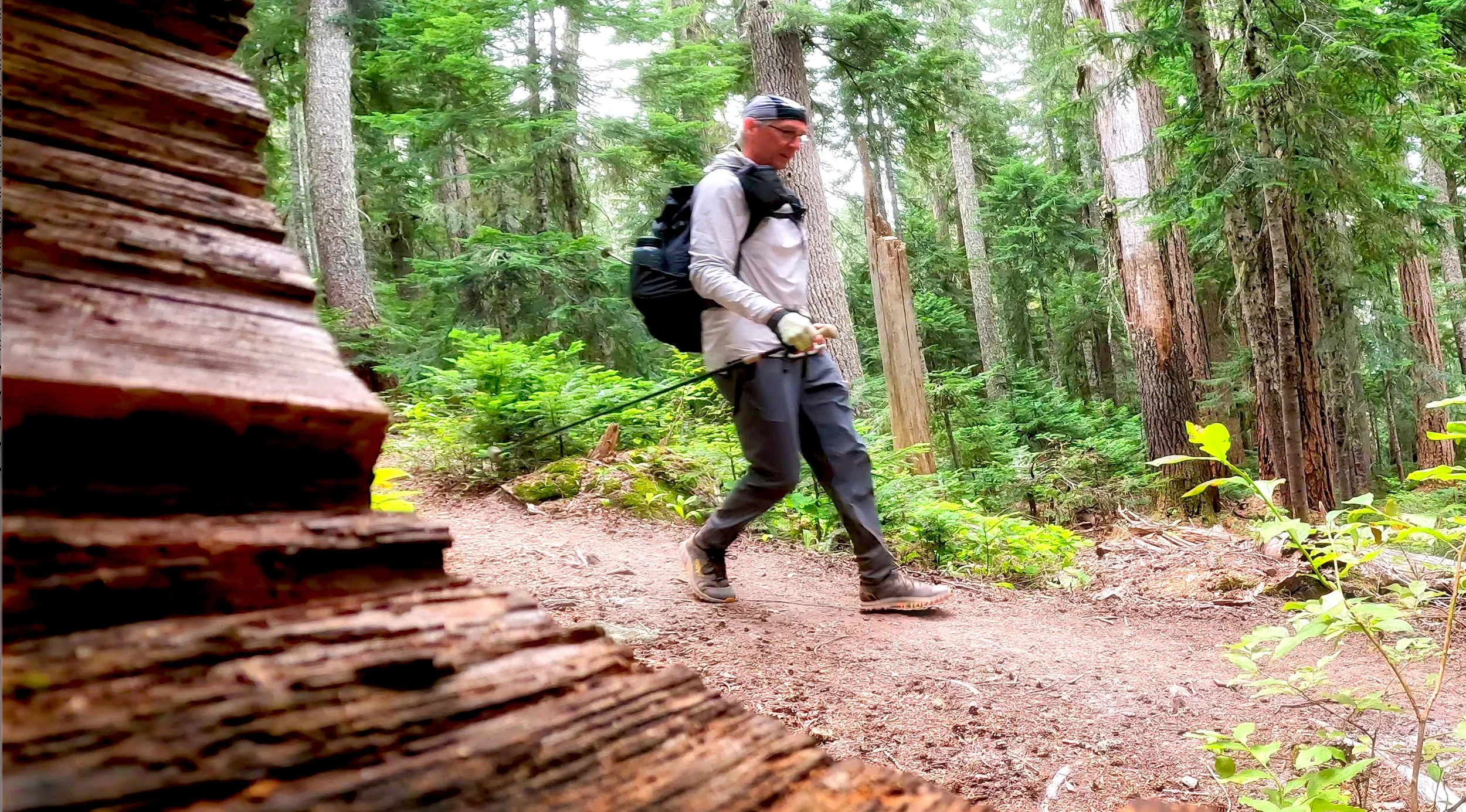
Willis Wall on the 2023 Wonderland Trail 3 day transit (#35)